Emergency & Dangerous Tree Removal in Omaha, TX
Not every tree removal is straightforward. Some trees pose exceptional challenges and risks — they're leaning over occupied structures, heavily damaged by disease or insects, weakened by storm or root damage, or positioned in ways that make standard felling techniques impossible. These are the jobs that require specialized skills, proper equipment, and the kind of experience that only comes from decades of work in the field. Wilderness Tree Service specializes in the removal of dangerous and hazardous trees throughout Omaha, NE, and the surrounding East Texas region.
Since 2012, our team has safely removed some of the most challenging trees in Titus County, Morris County, Cass County, Camp County, and Red River County. With over 30 years of combined work experience, we have developed the techniques and problem-solving ability to handle trees that other crews might turn away. If you have a tree that concerns you — one that you've been watching and worrying about — don't wait for it to come down on its own terms. Call or text us at (903) 563-0226 for a free assessment.
Call or Text for a Free Estimate—(903) 563-0226 | Available 24/7
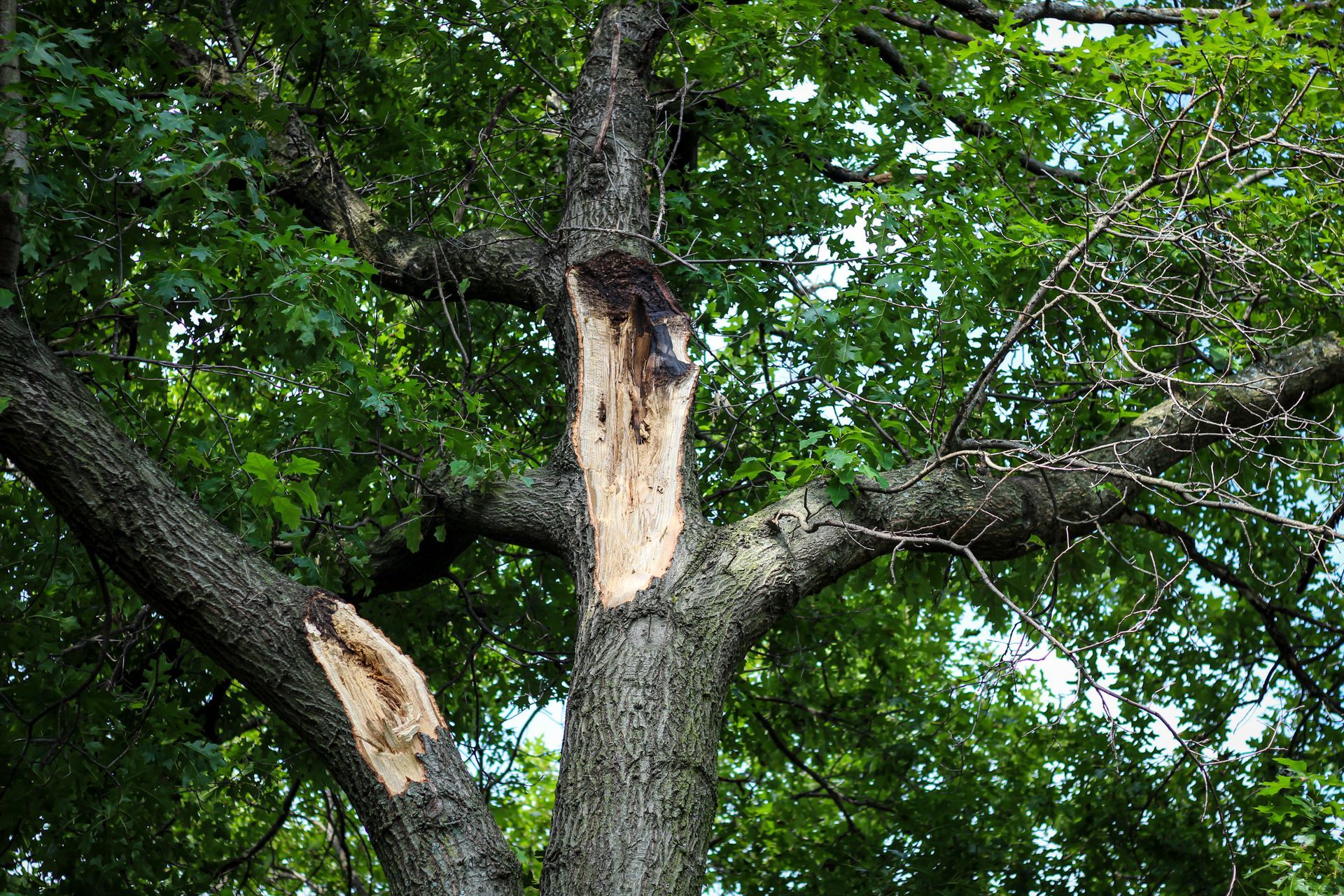
What Makes a Tree Dangerous?
Trees become dangerous when their structural integrity is compromised to the point where failure becomes likely. The most common factors that contribute to tree hazards in East Texas include:
Significant Lean — a tree that has developed a pronounced lean toward a structure, vehicle, or high-traffic area
Root Damage or Failure — root systems compromised by soil compaction, trenching, flooding, or root rot
Trunk Decay — internal decay or visible fungal growth at the trunk base indicate compromised structural wood
Storm Damage — major limb loss or trunk splitting that leaves the tree structurally unsound
Disease & Pest Infestation — advanced disease or bark beetle infestation that has killed significant portions of the tree
Dead Trees—completely dead trees lose structural integrity and can fall at any time
Co-Dominant Stems—trees with two or more large trunks growing from a common point are prone to splitting
Our Approach to Dangerous Tree Removal
Dangerous tree removals require planning that ordinary removals do not. Our process begins with a thorough assessment of the tree—evaluating its condition, the direction and severity of any lean, proximity hazards, access routes for equipment, and the safest method of removal. We then develop a plan that sequences the removal in a way that controls where each section falls, using rigging and lowering techniques where necessary to prevent damage to structures, utilities, and landscape features below.
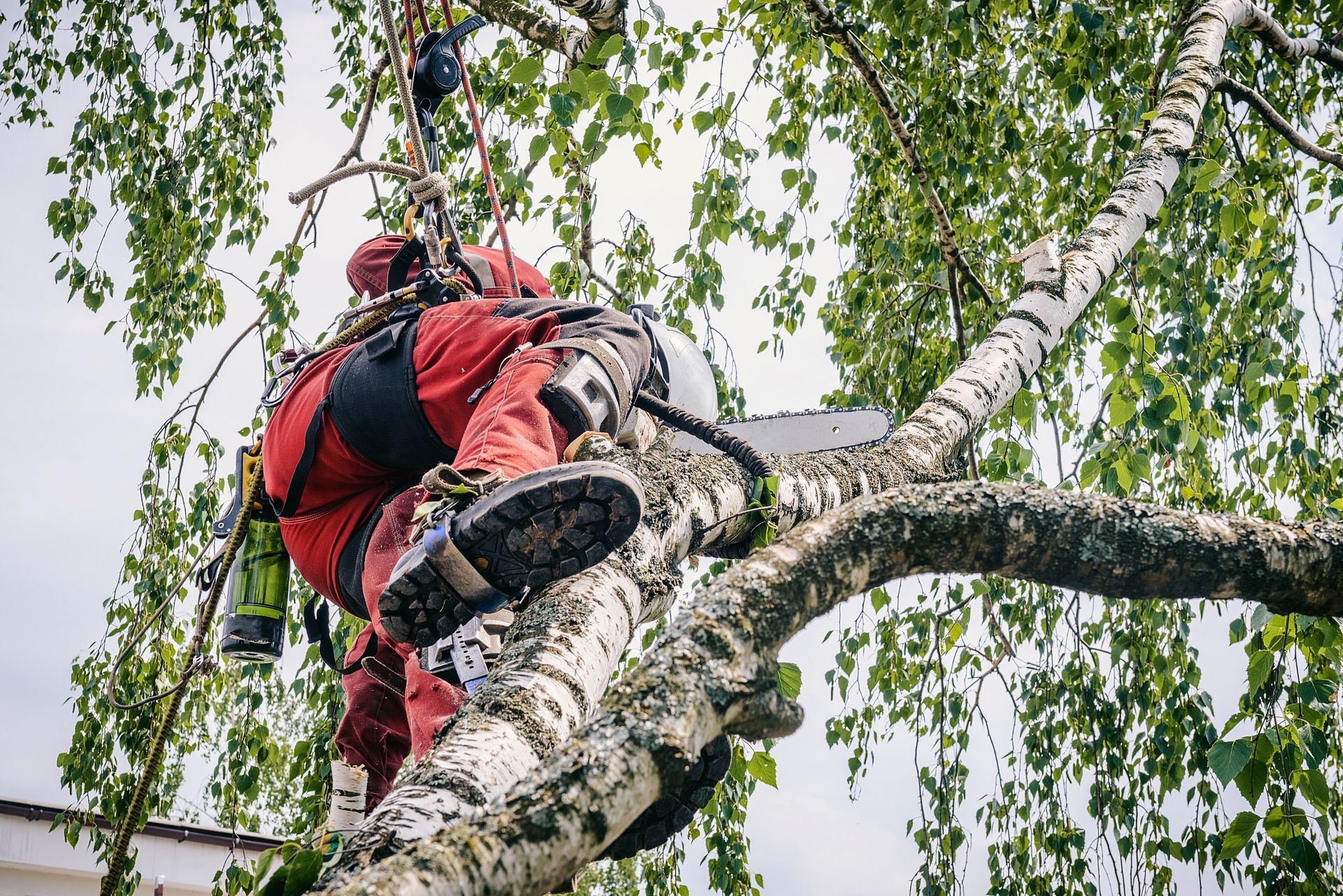
Our crew uses professional-grade rigging equipment, chainsaws, and aerial access tools to safely section and lower dangerous trees piece by piece when a straight fall is not possible. This method allows us to remove trees in situations where there is no safe fall zone — including trees overhanging homes, near power lines, and in tightly landscaped areas.
Don't Wait — Assess Hazard Trees Early
One of the most consistent findings in our experience is that property owners are aware of hazard trees long before they fail. If you have a tree you've been watching and wondering about—one that leans a little more every year, one that has dead sections at the top, one that seems hollow when you knock on it—that tree is telling you something. The cost of proactive removal is almost always far less than the cost of dealing with the damage caused by a tree that falls on your property.
Dangerous Tree Removal Frequently Asked Questions
How do I know if a tree on my property is dangerous?
Warning signs of a hazardous tree include a noticeable lean that has increased over time, large dead limbs in the upper canopy, cracks or splits in the main trunk, fungal growth (mushrooms or conks) at the base or on the trunk, hollow or soft sections when you knock on the trunk, root damage from digging or flooding, and visible cavities in the trunk. Any tree that is within falling distance of an occupied structure, vehicle parking area, or high-traffic walkway and shows any of these signs should be assessed by a professional. Call us for a free hazard tree assessment.
Is it more expensive to remove a dangerous tree than a normal one?
Dangerous tree removals typically cost more than standard removals because they require additional planning, specialized rigging equipment, more crew members, and more time to execute safely. The complexity of the job—the tree's proximity to structures, the severity of the lean, and whether aerial rigging is needed—determines the additional cost. During your free estimate, we will assess the specific challenges of your tree and provide a clear, honest price before any work begins.
Can I wait until after the next storm to have a dangerous tree assessed?
We strongly advise against waiting. A tree that is borderline dangerous in calm conditions becomes significantly more likely to fail during high winds, ice loading, or heavy rain—the exact conditions that accompany the storms you're waiting for. Many of the emergency calls we receive are for trees that the homeowner knew were a concern but hadn't acted on. Proactive removal is safer, less disruptive, and less expensive than emergency cleanup after the tree has already fallen. Call us today for a free assessment.
What if the dangerous tree is on or near a fence or property line shared with a neighbor?
Property line and shared fence situations add a layer of complexity to tree removal. In general, you have the right to remove a tree that is rooted on your property, even if branches or roots extend onto a neighboring property. If the tree is on or near the property line, communication with your neighbor before removal is advisable. Wilderness Tree Service can assess the situation during your free estimate and help you understand the best approach for your specific circumstances.
Call or Text for a Free Estimate—(903) 563-0226 | Available 24/7